Why Is My Embroidery Machine Shredding Thread?
Thread shredding usually comes from friction. A dull or wrong needle, a burr in the needle plate, or too-tight top tension rubs the thread until it frays. Swap the needle first, then check the thread path and tension.
On this page (8 sections)
- What causes an embroidery machine to shred thread?
- How do I know if a bad needle is shredding my thread?
- How do I check the thread path and guides?
- Is my tension too tight?
- Could the bobbin or bobbin case be the problem?
- What else in the machine can shred thread?
- Which fabric and stabilizer choices set up shredding?
- How do I stop the shredding for good?
Why is my embroidery machine shredding thread? Friction is almost always the answer.
A dull needle, a rough spot in the thread path or too-tight top tension rubs the thread until fibers fray and snap. Fix the cause and the shredding stops.
Start with the needle. It's the cheapest part to swap and the most common culprit.
Then walk the thread from spool to needle, checking every guide and the bobbin case.
What causes an embroidery machine to shred thread?
Most shredding happens where thread rubs against something sharp or tight. That includes a worn needle point, a burr on the needle plate, a snagged thread guide or a bobbin case that grips too hard.
The fix order matters. Check the needle, then the thread path, then the bobbin, and only then touch the tension dial.
Most sewers reach for tension first and end up chasing a problem that a new needle would have solved.
Heat is the hidden factor. Every stitch sends the needle through fabric, and a dull point creates drag that warms the thread.
Once the thread gets hot, it weakens and frays faster on the next stitch. Dense fills and small lettering push the needle through the same spot many times, so the heat builds there first.
That's why shredding often starts in a satin fill and leaves the light outline alone.
Friction also comes from the thread itself. A fuzzy or brittle spool drags through the guides even on a clean machine.
Before you blame the machine, run a length of thread between your fingers and feel for rough spots or thin patches. A thread that feels coarse or uneven will shred no matter how well you set the tension.
How do I know if a bad needle is shredding my thread?
A dull or wrong needle is the top cause, and you can spot it fast. Look at the needle under good light and feel the point.
A sharp embroidery needle glides; a worn one has a rounded or burred tip that grabs fabric and thread.
Match the needle to the thread and fabric. A size 75/11 needle suits most 40-weight polyester and rayon on cotton or linen.
Specialty threads like metallic need a larger eye and a different needle style, so check the needle type before blaming the machine. The point type matters too: the SCHMETZ Embroidery Needles use a medium ball point, which pushes between knit fibers instead of cutting them.
The SCHMETZ Embroidery Needles 75/11 pack covers everyday stitching with rayon and polyester. Its widened groove and enlarged eye are built to cut friction on decorative work.
Change the needle after about 8 hours of stitching, or sooner if you hear a popping sound. A fresh needle is the fastest test: if shredding stops after the swap, the old needle was the problem.
Keep a spare card on hand so you never stitch a dense design with a tired point. The pack comes as five cards of five needles, so there's always a sharp one within reach.
How do I check the thread path and guides?
Run the thread from spool to needle by hand and feel for drag. Every guide, tension disc and the take-up lever should let thread pass smoothly.
A rough spot catches a fiber, and the fray starts right there.
Open the tension discs and look for lint or thread fragments packed between them. Clean them with a brush, then rethread following the machine's path in order.
Skipping a guide changes tension and often causes shredding near the needle. A tiny sliver of old thread trapped in a guide is easy to miss and will keep catching the new thread until you pull it out.
Check the spool pin and any spool cap too. A spool that wobbles or drags on the pin feeds unevenly.
For more on the lower thread path, see our guide to embroidery machine bobbin thread.
Does thread quality matter?
Yes. Cheap or damaged thread frays under normal tension.
Check for fuzzy spots along the spool and tug a length: brittle thread snaps easily. Store spools out of sunlight and away from heat.
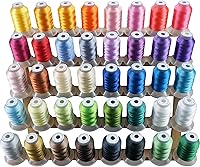
A consistent 40-weight polyester is a safe starting point. The brothread 40 Color Thread Kit gives you 40 spools at 40 weight and 500 meters each, with lower breakage and fraying risk from its polyester tenacity.
The kit also includes a color chart that maps each spool to Brother color numbers and a Madeira conversion chart, so you can match a design's thread list without guessing.
Skip bargain thread for dense designs. A kit like this one covers color matching for most beginner projects without hunting single spools.
Polyester also holds its color through washing and bleaching, so the spools you buy now stay usable for workwear and linens later.
Is my tension too tight?
Too-tight top tension pulls thread thin and makes it fray at the needle eye. The symptom usually shows as shredding right above the fabric, with the thread snapping close to the needle.
Test on scrap fabric with the presser foot up and the tension at the normal setting for your machine. Loosen the top tension in small steps only after you've ruled out the needle and thread path.
A bird's nest on the underside points to a different problem, covered in why does my embroidery machine bird nest.
Check the bobbin tension last. A bobbin case screw turned too far in grips the thread hard.
Most machines have a factory setting, so adjust only if you're sure the bobbin is the cause. A quick test is to hold the bobbin case by its thread: it should drop slowly, not fall fast and not hang still.
If it hangs still, the screw is too tight.
Could the bobbin or bobbin case be the problem?
A rough or overtight bobbin case can shred both threads. Remove the case and look at the tension spring and the slot the thread passes through.
A burr or a thread tail caught there catches the bobbin thread and drags the top thread with it.
Wind bobbins evenly. A lumpy wind creates tension spikes that fray the thread on the way out.
Use a bobbin thread made for embroidery rather than all-purpose thread. All-purpose thread is thicker than the embroidery bobbin thread most machines are timed for, and the extra bulk rubs in the case.
If the machine has a drop-in bobbin, check that the bobbin sits the right way up. A bobbin loaded backward can shred thread within a few stitches.
Pull a few inches of bobbin thread by hand after loading; it should come out with light, even resistance.
What else in the machine can shred thread?
Small mechanical faults cause big shredding. The needle plate hole, the bobbin case, and the hook race are the usual spots.
Run a fingertip around the needle plate hole and the bobbin case edges; a burr feels like a rough lip.
A burr the size of a grain of sand is enough to fray thread over and over in the same spot.
Check the needle bar height and whether the needle strikes the plate. A bent needle or a loose needle screw makes the needle hit the plate, which nicks the point and starts the shredding cycle.
Roll a needle on a flat surface to check for bend; a straight one rolls evenly. For the workspace itself, our guide to the embroidery machine table covers setup that keeps the machine steady.
A dirty machine adds friction too. Lint and old oil gum build up in the bobbin area.
The OAIEGSD Sewing Machine Oil and Cleaning Kit includes light oil and brushes for clearing lint before you oil the moving parts. The oil is a clear ISO VG-10 light machine oil that doesn't stain fabric and flows into tight spots through a 1.5 inch precision applicator.
The kit has a 4 ounce bottle for regular maintenance and a 1 ounce bottle with a needle tip for the bobbin area.
Clean and oil on the schedule your manual gives. A smooth-running machine has less drag on the thread.
Brush the lint out first, then add a drop or two of oil; oiling over lint just makes a sticky paste that catches more fuzz.
Which fabric and stabilizer choices set up shredding?
The wrong stabilizer or a loose hoop lets fabric flex, and the needle drags on it. A sharp needle punches cleanly; a flexing hoop makes the needle work harder and rub the thread.
Use a cut-away or tear-away stabilizer suited to the fabric weight. Hoop the fabric taut without stretching it.
For more on hooping and stabilizer, see the hoops and setup category.
Dense designs need more support than light ones. Satin fills and small lettering are the first places shredding shows up when the stabilizer is too light.
If a design shreds in one spot and stitches cleanly everywhere else, look at the fabric support under that spot before you change the needle again.
How do I stop the shredding for good?
To fix why your embroidery machine is shredding thread, work in order: new needle, clean thread path, even bobbin, then tension. Most cases end at the first step.
Start with a size 75/11 embroidery needle and a 40-weight polyester thread.
Pick the SCHMETZ pack for the needle, the brothread kit for consistent thread, and the OAIEGSD kit for lint and oil care. If shredding continues after all three, check for a burr on the needle plate or a bent needle bar.
Slow the speed on dense designs and change needles on schedule. A clean, sharp machine with good thread rarely shreds.
For your next color change, keep spools organized with our guide to machine embroidery thread.
Frequently asked questions
How often should I change an embroidery needle?
Change it after about 8 hours of stitching, or sooner if you hear a popping sound or see skipped stitches. A dull needle drags on the thread and starts the fraying that leads to shredding.
Can the wrong bobbin thread cause shredding?
Yes. Bobbin thread that's too thick for the needle or wound unevenly can snag and pull the top thread until it frays.
Use a bobbin thread made for machine embroidery and wind bobbins evenly.
Does thread shredding always mean the tension is wrong?
No. Tension is one cause among several.
Check the needle, the thread path and the bobbin case before you touch the tension dial, because adjusting tension to fix a needle problem usually makes things worse.
Why does shredding start only on dense designs?
Dense fills push the needle through the fabric many times per inch, so heat and friction build up fast. Slow the machine speed and use a fresh sharp needle for satin fills and lettering.